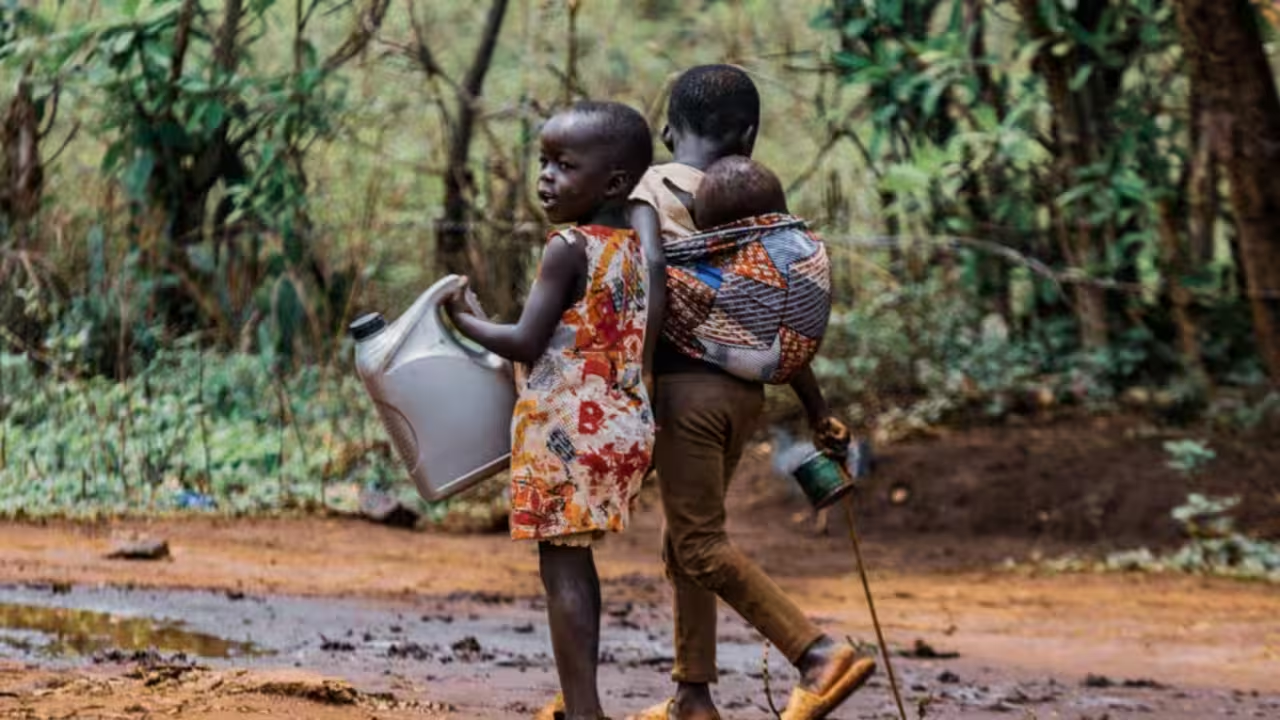
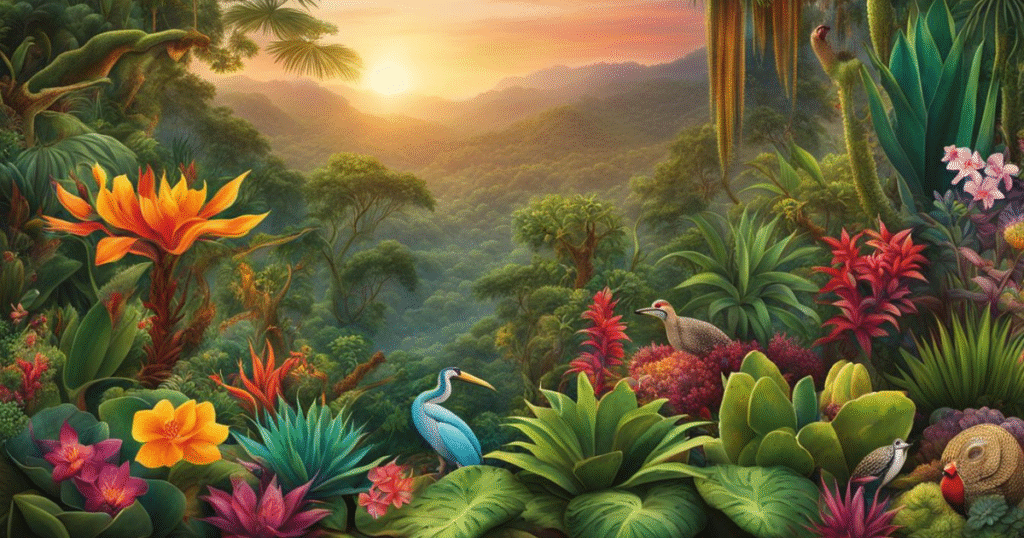
Nature is something we witness every day, yet barely understand it beyond scenery, beauty, or wilderness. We may simply regard it as our ultimate provider – the invisible force behind every form of life on the planet, flowing through every breath we inhale, every sip of water we drink, and every ray of sunlight that sustains us. Yet, nature is far more than a collection of distant landscapes or a resource behind our existence.
This greatest life-support system of humanity nurture us through a delicate yet powerful network that connects oceans, forests, wildlife, microorganisms, atmosphere, and human life into a single interdependent web. The cycle of life depends on these intricate connections and processes, which form the living threads of the great tapestry of life, with every element supporting the other in subtle yet vital ways.
Each of these processes, no matter how small, is a crucial thread in contributing to the ecological balance of the planet. Together, these countless interactions sustain ecosystems resilience and reveal the value of nature’s gifts. But how an organism forms a vital thread in the intricate web of life and contribute to the stability of the planet? How a living thing help sustain the delicate balance that makes life possible?
To answer these questions, we must look beyond nature’s visible beauty and explore the heart of ecological balance on Earth – the intricate web of relationships and natural processes that transforms our planet from a seemingly lifeless rock into a vibrant, evolving, and awe-inspiring sanctuary of life.
Understanding the Importance of Ecological Balance on Earth: A Necessity for Our Survival
What is ecological balance on Earth, and why does nature deserve our profound respect, care, and protection?
In truth, every aspect of our lives – health, economies, and cultures – draws strength from the natural world. The Earth functions as a vast, interconnected living system where every species has a role and every natural process contributes to the stability of life. From towering forests and flowing rivers to microscopic soil organisms, each component performs a unique function that helps keep the planet healthy and resilient.
Nature resembles a grand symphony in which every living organism adds its own note, creating a harmony that sustains life. When human beings are eco-friendly and learn to live in harmony with nature rather than dominate it, they rediscover a fundamental truth: the health of our planet depends on maintaining a delicate balance between living organisms and the environment that supports them. Our own well-being is inseparable from the well-being of the natural world.
Ecology provides the scientific framework for understanding this intricate relationship. It is far more than an academic discipline and offers practical solutions to some of humanity’s greatest challenges, including climate change, biodiversity loss, food insecurity, water scarcity, and ecosystem degradation. By revealing how natural systems function and interact, ecology helps us make informed decisions that protect both people and the planet.
The environment itself is not static. It is constantly changing through natural processes and human activities, while living organisms continuously adapt to these changes. This dynamic relationship forms the foundation of life on Earth. It includes both abiotic components – such as air, water, soil, sunlight, and climate – and biotic components, including plants, animals, fungi, and microorganisms.
Together, these elements create complex ecosystems in which every species depends, directly or indirectly, on countless others. Within these ecosystems, organisms compete for essential resources such as food, water, shelter, sunlight, and space.
At the same time, they must cope with changing temperatures, rainfall patterns, natural disasters, predators, and disease. Every species can tolerate environmental change only within certain limits. When those limits are exceeded, survival, growth, and reproduction become increasingly difficult.
This delicate equilibrium between living organisms and their physical environment is known as ecological balance. This balance is not accidental; it is the outcome of countless interconnected processes – the flow of energy from the sun, the balance of gases in the atmosphere, the movement of nutrients through soil and water, and countless interactions among plants, animals, microorganisms.
Together, these processes form the hidden architecture of life – the delicate natural order that allows Earth to remain alive, resilient, and capable of sustaining us. It exists when natural systems function in harmony, allowing ecosystems to remain healthy, productive, and resilient without suffering long-term disruption.
Ecological balance on Earth depends on the intricate interdependence of plants, animals, microorganisms, air, water, and soil, all working together through continuous cycles of energy and nutrients. Every organism requires sufficient food, water, habitat, and suitable environmental conditions to survive and reproduce.
When any part of this interconnected system is disturbed – whether by pollution, deforestation, habitat destruction, invasive species, or climate change – the effects ripple throughout the ecosystem. A single imbalance can trigger a chain reaction, affecting species populations, ecosystem services, and ultimately human societies. Understanding ecological balance on Earth is therefore essential for protecting our future.
By recognizing the warning signs of ecological imbalance and understanding how our daily choices shape the environment, we become better equipped to reduce our ecological footprint, support conservation efforts, influence environmental policies, and promote sustainable living. The sooner we act, the greater our chances of preserving the natural systems upon which all life depends.
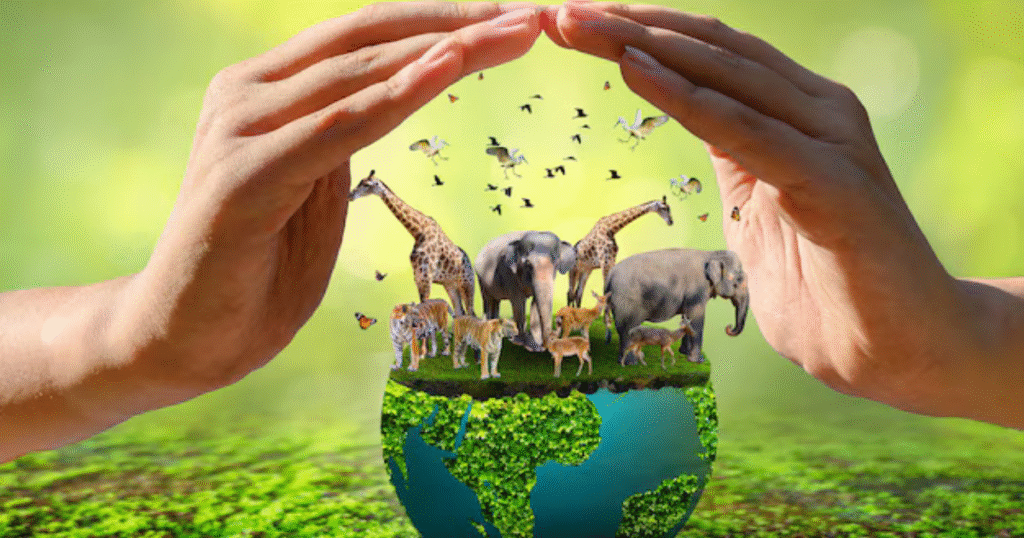
How Ecological Balance Keeps Our Planet Stable?
When we view nature through the lens of ecology – the scientific study of ecosystems – we begin to understand how deeply species depend upon one another. From coral reefs shimmering with marine life to dense rainforests humming with insects, birds, mammals, and plants, each environment operates because of the relationships that exist within it. These relationships – feeding, competing, cooperating, and evolving – give ecosystems their structure and resilience. Without this balance through intricate connections within natural systems, species collapse, environments degrade, and the web of life weakens.
To understand this, we must look closely at the ecology examples that makes life possible on Earth. Every organism – no matter how seemingly significant or insignificant – plays a vital role in keeping the planet functioning. Microbes break down organic matter, returning nutrients to the soil. Plants convert sunlight into energy, forming the base of the food chain. Herbivores maintain plant growth, while predators prevent imbalance by keeping herbivore populations in check. Forests regulate climate by acting like planet’s lungs – absorbing carbon and releasing oxygen.
Instead of functioning as separate units, ecosystems behave like living communities where each member influences the whole. For example, bees are not important only for honey production; they also play a vital role in pollination. Without bees, crops and wildflowers would decline, affecting many animals and humans who depend on them for food. Similarly, the disappearance of a keystone predator like a wolf or tiger can disturb the entire ecosystem. Without predators, herbivore populations may grow excessively and destroy vegetation, leading to ecological imbalance.
When ecological balance on Earth is preserved, ecosystems thrive – they support biodiversity, regulate nutrient cycles, purify air and water, and keep the planet capable of sustaining life. But when this balance is disturbed, the consequences affect not only wildlife but also humanity itself, because human beings are also entirely dependent on ecological balance on Earth for survival.
Since they are an integral part of both natural and social systems, it is essential to connect environmental sustainability with social responsibility. Such an integrated approach helps preserve ecological balance on Earth, which is indispensable for human survival and well-being. Restoring and protecting ecological balance is essential for building resilience, preventing future crises, and ensuring hope for future generations. While environmental degradation threatens environmental security, economic stability, and human health.
The Invisible Threads of Nature: Balance and Harmony
The natural forces operate in perfect harmony, regulating temperature, purifying air and water, replenishing resources, and maintaining the delicate equilibrium upon which life depends. Together, these relationships form a fragile yet resilient web of interdependence.
Nature operates through invisible threads that link all living and non-living things. Every organism, from the tiniest microbe to the mightiest tree, forms a vital thread in the intricate web of life. The cycle of life depends on these connections and processes.
Together, these processes make the living threads that weave the great tapestry of life, with each supporting other in subtle yet vital ways. Each of these processes, no matter how small, is a crucial thread in the vast fabric of life. They contribute to the planet’s fragile ecological balance. The abundance and resilience of this balance on Earth remind us of nature precious gifts.
Biodiversity: The Heart of Nature’s Balance and its Living Wealth
At the center of the Earth’s delicate ecological balance lies biodiversity – the astonishing variety of life forms that inhabit our planet. It encompasses every species of plant, animal, and microorganism, as well as the ecosystems they depend upon.
Biodiversity ensures resilience and adaptability. It allows ecosystems to recover from disruptions, whether caused by natural events or human actions. Essential natural processes like pollination, soil formation, and water purification depend on this diversity.
When species vanish or ecosystems degrade, these vital processes weaken, threatening the natural world’s stability. Acknowledging that no species can survive in isolation, we begin to appreciate the depth and beauty of our planet’s natural design – held together by delicate threads of ecological balance on Earth. It is achieved not by chance but by millions of years of adaptation, cooperation, natural selection.
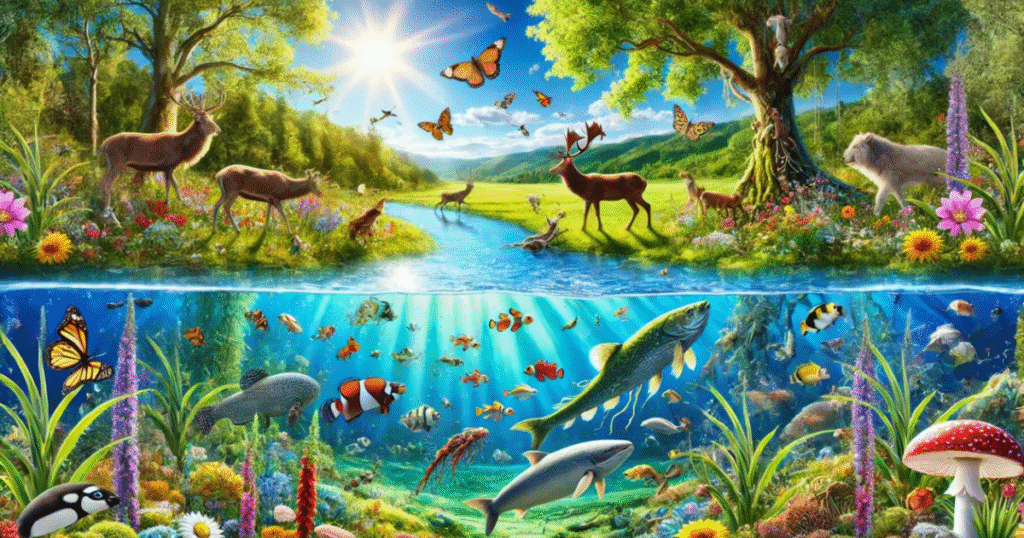
The Two Pillars of Ecological Balance: Diversity and Harmony
The Natural harmony – intricate, powerful, and irreplaceable – reminds us that preserving nature is not merely an environmental concern or act of compassion, but a fundamental responsibility vital to our own survival. Our relationship with nature must be guided by two vital principles if we are to preserve this fragile equilibrium:
-
Diversity: Protecting the variety of ecosystems and species ensures that no single system collapses. When one ecosystem falters, it affects countless others, weakening the web of life.
-
Harmony: Within each ecosystem, relationships – between predator and prey, plant and soil, air and water – must remain balanced. This inner harmony keeps nature alive and thriving.
We must protect the diversity of ecosystems, ensuring that no single system is degraded or lost, as the effects of a faltering ecosystem ripple outward, disturbing countless others and unsettling the intricate web of life. Secondly, to maintain the inner balance or harmony within each ecosystem – between predator and prey, herbivore and carnivore, plant and soil – to keep nature thriving.
Health and Stability of Our Planet
Maintaining the ecological balance of life among species is crucial for health and stability of our planet. When we honor nature, we honor the very source that allows us to breathe, grow, and flourish. To safeguard this living harmony is to safeguard our own future – because when this balance falters, so too does the rhythm of life within and around us begins to fade.
For example, bees are vital pollinators responsible for the reproduction and growth of plants. If bee populations decline due to pesticides or habitat destruction, it can set off a chain reaction – crop failures, shrinking food supplies, and economic loss. Similarly, fungi decompose dead organic matter and return nutrients to the soil to ensure the continued fertility needed for plant growth.
The ecological balance on earth is essential for survival of all living organisms. Forests, wetlands, rivers, and oceans are more than beautiful landscapes – they are life-support systems of our planet. When we are eco-friendly and protect them; they offer us:
* Clean air and water
* Food and medicinal resources
* Climate regulation
* Natural beauty and recreational spaces
Our ecological footprint decides our impact on nature. In case of any disruption to the intricate balance of nature, whether from natural events or human activity, can have cascading negative effects throughout the entire system. The consequences of exploiting nature recklessly ripple through the entire web of life, and ultimately reaching us.
Ecology and Human Health: A Direct Connection
A well-balanced ecosystem does more than sustain nature – it safeguards human health. Natural systems help regulate the spread of diseases by maintaining predator-prey relationships and supporting species that control vectors. For example, healthy populations of bats and birds keep mosquito numbers in check, reducing the transmission of illnesses such as malaria and dengue.
When ecosystems are disturbed, these natural defenses weaken, which create ideal conditions for pathogens and disease carriers to flourish. The COVID-19 pandemic, widely linked to disrupted interactions between humans and wildlife, stands as a stark reminder of the consequences of ignoring the ecological boundaries. It underscores a critical truth: protecting ecosystems is not merely an environmental priority but a public-health imperative.
Human Impact: A Growing Threat
Nature has long been the greatest provider and protector of humanity; however, both natural and anthropogenic factors can disrupt its delicate equilibrium. The loss of even a single organism can trigger cascading effects throughout the ecosystem. Such disturbances damage the natural environment and affect human emotions, livelihoods, lifestyles, attitudes, ultimately posing serious challenges to survival itself.
So far, the human made progress has come with serious consequences. Human societies have evolved beyond mere survival. Their relationship with Earth has fundamentally changed over thousands of years, transforming from just passive inhabitants of the planet into active architects of its systems. They transformed agriculture over time, altered ecosystems and biodiversity.
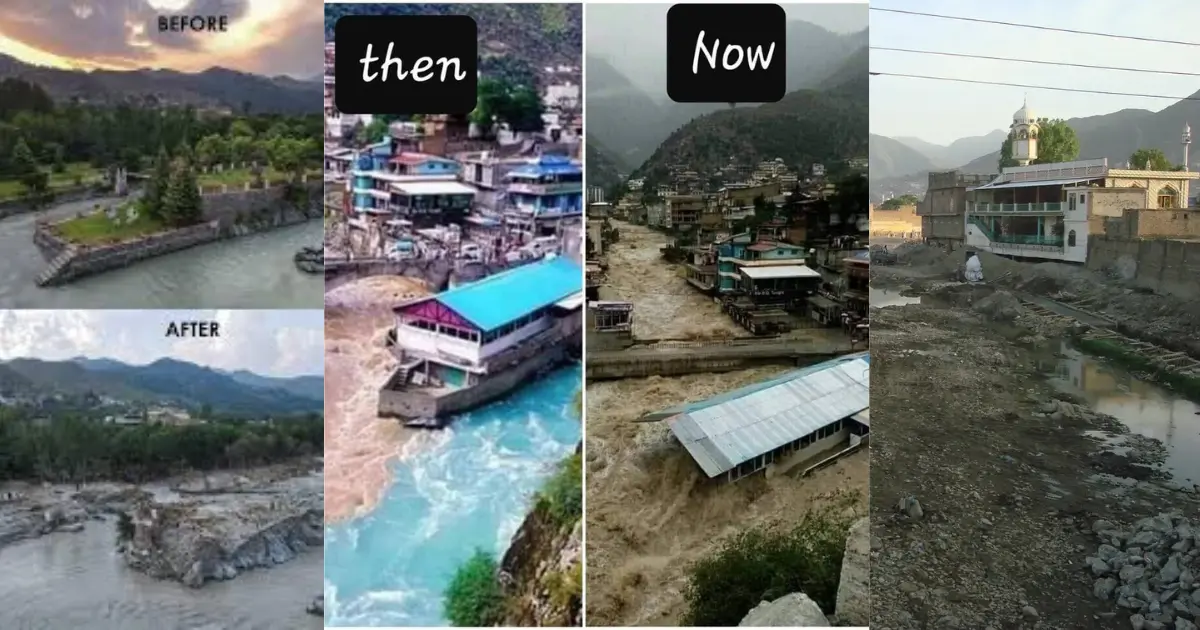
Cities redefined land use and resource consumption. Industrialization accelerated extraction and pollution. Human activities are posing greatest threat to the delicate ecological balance on earth. Industrial expansion, deforestation, rapid urbanization, habitat destruction, pollution, overfishing, and climate change are pushing species and ecosystems to the brink.
Our planet is under threat today. The shifting weather patterns is disrupting migration cues, while fragmented habitats are reducing genetic diversity. The stakes are high, the destabilized ecosystems can erode food security, pollute water systems, and weaken climate defense mechanisms. Stability is structural; without it, human supply chains can be impacted.
According to the World Wildlife Fund (WWF), only 23% of the Earth’s land surface today is considered “wilderness.” The remaining 77% is used for human purposes – including cities, farms, and grazing lands. Urban areas currently occupy about 3% of the Earth’s surface but are projected to grow to nearly 4% by 2050. Croplands cover about 12%, and pastures occupy around 27%.
These figures highlight the scale of human influence – and the urgent need to safeguard what remains of the natural world. As ecosystems shrink, biodiversity declines – and with it, the resilience of our planet.
Climate change is accelerating this degradation, reshaping habitats faster than species can adapt. Sadly, human activities have disrupted the ecological balance on Earth at an alarming rate. We exploit nature, as if, it were infinite, forgetting that these systems are delicate and finite. As ecosystems become less diverse, they grow more vulnerable to disease, invasive species, and environmental changes.

Restoring the Ecological Balance of Our Planet
The ecological balance reflects the intricate and stable relationships that bind all living organisms to their environment. When we see nature not just as a resource, but a living breathing system, we begin to understand the beauty of fine balance of nature. We understand why it is essential to preserve the variety of interconnected ecosystems. Within every ecosystem, balance must prevail among all the living elements that depend on one another for survival.
Balance is the essence of an ecosystem. This equilibrium maintain biodiversity and ensure the survival of all organisms, as every part plays its role in the food web and nutrient cycling. Every act of preservation – like planting a tree, protecting a forest, and conserving water – helps restore this equilibrium. By respecting natural order, we ensure that Earth remains a nurturing home for all species.
How We Can Help Protect the Ecological Balance on Earth?
The resilience of life reminds us that nature’s wealth is not infinite. The responsibility of protecting nature is tied to our own well-being. By studying how the natural systems work together, we come closer to understanding what keeps the Earth stable.
Restoring the ecological balance on earth begins with awareness and small, as well as meaningful choices. It is our shared responsibility to protect and restore this balance, not just for environment, but for continuity of life itself.
The importance of ecological balance on earth means that every species has the resources it needs to survive without harming others. To preserve it, we must reduce pollution, recycle more, and use water and energy wisely.
Beyond policies lies a deeper truth – our emotional and spiritual connection to nature. When we see ourselves as part of the Earth’s living fabric rather than its rulers, we rediscover harmony. It means using natural resources wisely – meeting our present needs without compromising the ability of future generations to meet theirs. To live sustainably, we must:
-
Reduce waste and single-use plastics
-
Plant native trees and support reforestation
-
Conserve water and electricity
-
Support wildlife and habitat conservation
-
Choose sustainable, and eco-friendly products
-
Spread environmental awareness through storytelling and action
Our everyday choices of what we consume, how we travel, and how we dispose of waste can either restore or disrupt the natural balance. Each choice we make either strengthens or weakens the planet’s balance. Keeping importance of ecological balance on Earth in mind, we must know that this balance is achieved when there are no negative effects on the planet and every species have enough resources for survival and reproduction. Sustainable practices are not merely environmental ideals; they are practical necessities for long-term survival.
Respecting The Limits of Earth’s Systems
The ecological balance on earth supports life forms. It proposes that the eco-systems are usually in a stable equilibrium, entailing that even a small change in the size of a particular population will be corrected by negative feedback.
The theory describes the relationship between ecosystems, the atmosphere, and the world’s weather. When we damage the ecological balance on Earth, we not only reduce biodiversity but also endanger our own survival. It is, therefore, crucial to acknowledge these threats and take steps to protect the ecological balance of our planet through conservation efforts, sustainable practices, and responsible consumption.
Sustainable living is about meeting our current needs without compromising the planet’s ability to provide for future generations. To achieve this, we must live in harmony with nature – using resources wisely and respecting the limits of Earth’s systems. Deforestation and industrial expansion may offer short-term benefits, they destroy habitats and weaken ecosystems. In contrast, reforestation, renewable energy, resource conservation restore balance and promote long-term stability.
Conclusion
The importance of ecological balance lies in the silent rhythm that keeps life in motion. It ensures the survival of countless species, maintains biodiversity, supports sustainable living, and guards human health. Yet this balance is fragile – and once disturbed, it can take centuries to restore.
As inhabitants of this planet, it is our responsibility to protect the natural harmony that nurtures us. We must preserve the ecological balance of our planet– not just for ourselves, but for every living being that shares this home with us. In the end, to safeguard the ecological balance is to safeguard our own existence.

21 thoughts on “Understanding the Importance of Ecological Balance on Earth: A Necessity Beyond Survival”
Comments are closed.